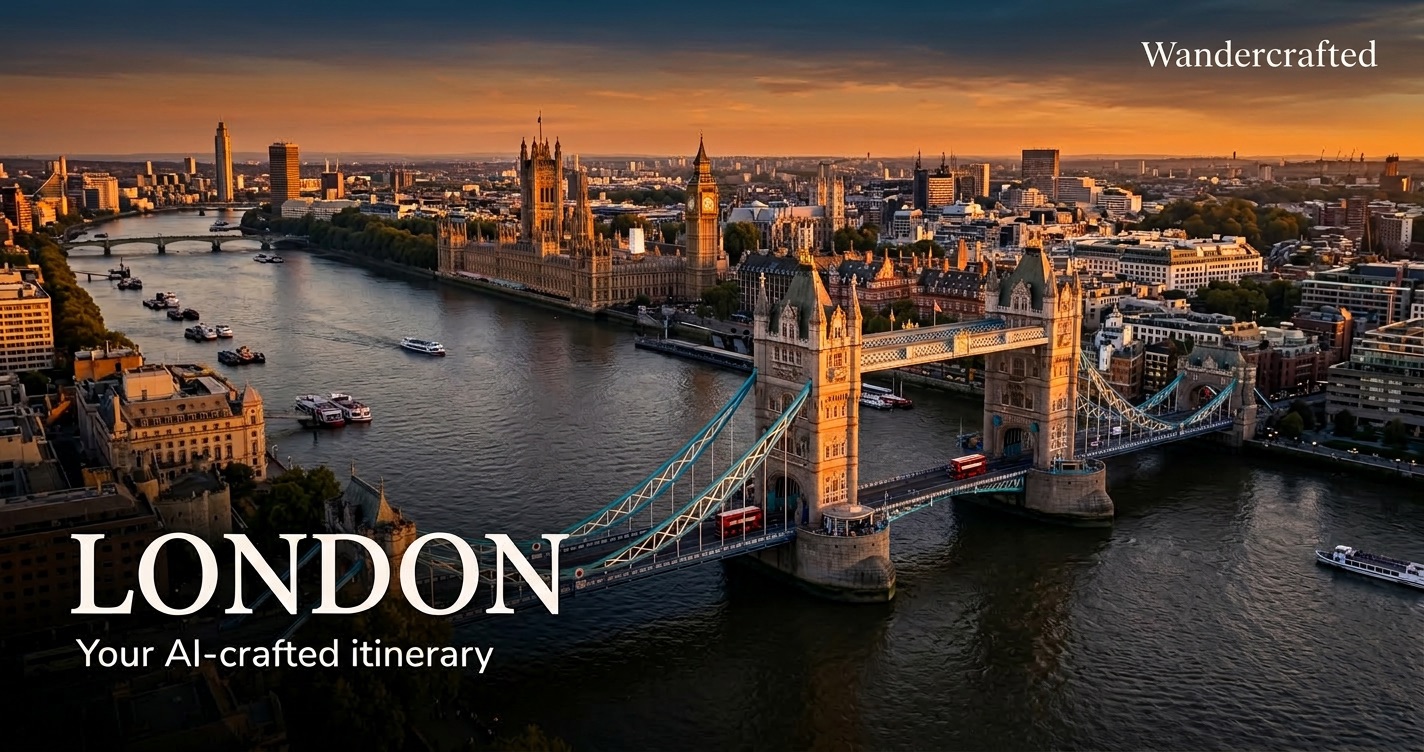
What a 7-day London trip actually looks like
London defies simple categorisation. It's one of the world's great history and culture cities, and also one of its great food and nightlife cities. The trick is knowing that tourist London (Oxford Street, Buckingham Palace changing of the guard) and real London (Bermondsey, Dalston, Richmond Park) often share the same postcode but not the same energy.
The itinerary below balances iconic sights with genuine neighbourhood exploration. Your Wandercrafted plan shifts based on whether you're here for museums, food, theatre, history, or the pub on the corner.
Arrival & South Bank
Westminster, St James's & the National Gallery
East London: Shoreditch, Brick Lane & Spitalfields
The British Museum, parks & your London
Essential London trip planning tips
Good planning makes London feel effortless. Here's what actually matters.
Oyster card or contactless
Tap any UK or international contactless card directly on TfL gates. The daily cap (Zone 1–2: ~£8.50) kicks in automatically — no need to think about it.
Free world-class museums
The British Museum, National Gallery, V&A, Natural History Museum, Tate Modern, and Science Museum are all free. This is unusual globally and genuinely exceptional.
Pub culture
London pub culture is real and worth engaging with. Sit in the back garden of a local pub on a Sunday afternoon and you'll understand why Londoners love it. Avoid tourist pubs near Covent Garden.
The weather
Bring a light waterproof every day regardless of the forecast. London weather changes hourly. The upside: rain is rarely heavy or prolonged.
Theatre
The West End is the world's best theatre offering. TKTS booth in Leicester Square does day-of discounts. Many fringe productions in Southwark and Islington are excellent and half the price.
Night buses
The Tube stops around midnight. Night buses (N-prefixed) and the Night Tube on Fridays/Saturdays run later. Download the TfL Go app for real-time journey planning.
This itinerary is just the starting point
Your Wandercrafted London plan adapts to exactly how you like to travel. Tell it your preferences:
London trip planning – frequently asked questions
How many days do you need in London?
Five days covers the main sights. Seven lets you move into neighbourhoods and feel the city properly — a Saturday at Borough Market, a Sunday in Shoreditch, a river bus to Greenwich. London rewards time more than almost any other city.
What's the best time of year to visit London?
May and June are arguably perfect — long days, reasonable temperatures, and the parks in full bloom. September and October are also excellent. July and August are busy and warm but rarely hot. Winter is grey and wet but Christmas lights and uncrowded museums make November–December appealing.
Is London expensive?
Yes, particularly for accommodation and restaurants. Budget hotels start at £100–150/night in decent locations. The saving grace: world-class museums are free, parks are everywhere, and eating well doesn't require spending a lot — Pret, decent pub food, or any ethnic food market offers quality at low prices.
How does Wandercrafted personalise my London itinerary?
London is too large and varied for a generic plan. Tell Wandercrafted whether you're here for history, food, nightlife, theatre, or a mix — plus your pace, budget, and group. The AI creates a neighbourhood-grouped itinerary so you're not crossing the city unnecessarily, surfacing the restaurants and experiences that match your style.
Explore all destinations
Wandercrafted builds personalised day-by-day itineraries for hundreds of cities worldwide.