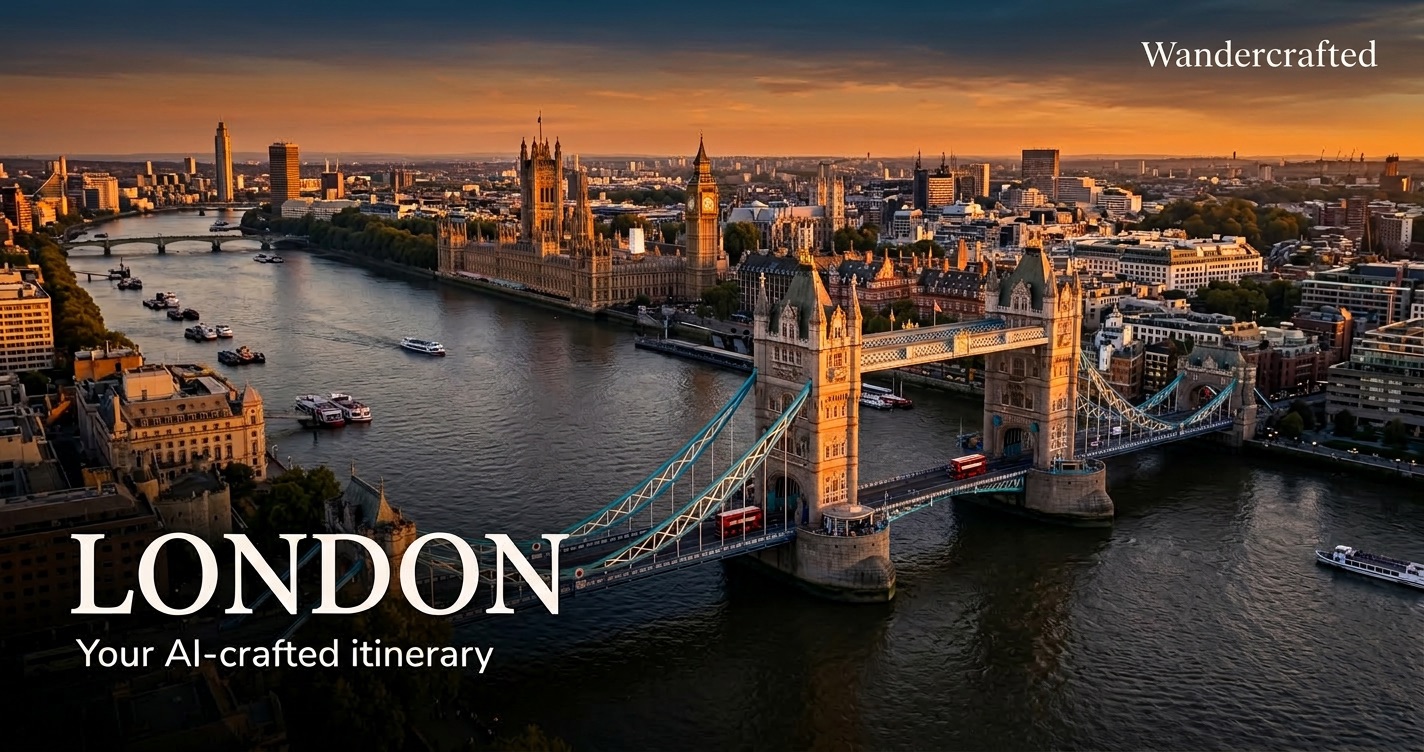
The short answer
Four days is the ideal length for experiencing London's essence without feeling rushed. It's enough time to explore distinct neighbourhoods, visit world-class museums (many free), experience royal London, eat brilliant food across all price points, catch a West End show, and still have breathing room. You'll hit the major highlights — Big Ben, Tower of London, Westminster Abbey, British Museum, Brick Lane, Notting Hill — while maintaining a sustainable pace. Unlike Paris or Rome (where 2-3 days can feel sufficient), London rewards time spent wandering side streets, ducking into pubs, and discovering independent boutiques and markets.
Why 4 days works for London
London is a city of neighbourhoods, each with distinct character. With 9 million people in Greater London and 22 UNESCO World Heritage sites, four days balances immersion with depth. Unlike Tokyo (where sensory overload is relentless), London invites you to slow down — grab a proper coffee in Soho, nurse a pint in a centuries-old pub, wander a museum for hours without rush. This itinerary gives you that rhythm while hitting unmissable landmarks. The beauty of London is its walkability; you can cross from Westminster to South Bank on foot in 20 minutes, exploring architecture and street life along the way. Consider extending to 5-6 days if you want day trips (Stonehenge, Oxford, Windsor) or deeper neighbourhood exploration (Hackney, Clapham, Belsize Park).
Quick 4-day overview
| Day | Theme | Neighbourhoods | Budget/Day (GBP) |
|---|---|---|---|
| Day 1 | Royal London & South Bank | Westminster, Southwark, Waterloo | 60-90 |
| Day 2 | The City & East London | Tower Hamlets, Shoreditch, Brick Lane | 50-80 |
| Day 3 | West London Culture | Kensington, Chelsea, Notting Hill, Hyde Park | 70-120 |
| Day 4 | Camden, Museums & West End | British Museum, Covent Garden, West End theatre | 80-180 |
4-day vs 2-day vs 7-day comparison: Two days lets you see Westminster, Tower of London, and one museum but feels rushed and exhausting. Seven days adds day trips, deeper neighbourhood exploration, and secondary museums. Four days is the goldilocks zone — enough time to experience varied London (royal, gritty, cultural, bohemian) while staying energised throughout.
Day 1: Royal London and South Bank
Big Ben, Westminster Abbey, London Eye, Borough Market
Morning: Westminster's political heart
Start early (8-9 AM) at Westminster Abbey — the royal church where monarchs are crowned and buried (entry ~24 GBP, or free for UK citizens during morning services). The Gothic architecture, royal tombs, and peaceful cloisters are stunning. Audio guides are helpful. Spend 60-90 minutes. Emerge onto the street and walk to Big Ben (Parliament's clock tower, currently under renovation but photographable from outside). Walk past Buckingham Palace (the Queen's official London residence) and through St. James's Park — one of London's loveliest parks with views back to the palace, local waterfowl, and manicured gardens. Stop for breakfast or coffee at a café in the park.
Afternoon: South Bank's cultural sweep
Walk across Westminster Bridge (pedestrian, free, brilliant Thames views) to South Bank, London's cultural powerhouse on the southern bank of the Thames. Start at the British Museum's sister, the National Gallery (Trafalgar Square, 10-min walk east, FREE entry, donation welcome) — world-class paintings from Renaissance to Impressionism. Spend 90 minutes if art interests you; it's impossible to see everything. Return south and explore South Bank's riverside walkway — street performers, art installations, river views. Visit the London Eye (the Ferris wheel, 25-30 GBP for 30-min rotation, often sold at discount online) for 360-degree views. Or skip it and walk to Tower Bridge (30-min walk east, or 10 min by bus; free to photograph, 13 GBP to cross the bridge interior). The bridge is stunning from both banks.
Evening: Borough Market and dinner
Head to Borough Market (historic food and produce market, undercover, excellent) — grab dinner from any stall. Try Pieminister (pies, 10-12 GBP), Padella (fresh pasta, 12-16 GBP), Andina (Peruvian, 18-25 GBP), or street fish & chips (10-12 GBP). Sit by the Thames and watch sunset. If you skipped the London Eye, explore more of South Bank's museums and galleries (Shakespeare's Globe, Tate Modern, design museums) — many are free or cheaply ticketed. Finish with a pint in a riverside pub like The Kings Arms or The Anchor.
Budget estimate: Westminster Abbey 24 GBP, breakfast 8 GBP, National Gallery free, lunch 12 GBP, London Eye/Tower Bridge 25-35 GBP, dinner 15-20 GBP, pub 8-10 GBP, transport (Oyster) 3 GBP = 95-125 GBP. Budget under 90 GBP by skipping London Eye and eating market food.
Insider tip: Many London museums are completely FREE with just a suggested donation — British Museum, National Gallery, National Portrait Gallery, V&A, Natural History Museum, Tate Modern, Design Museum. Budget travellers can spend full days in world-class museums for free. Westminster Abbey and Tower of London charge entry, but everything else can be free. The Oyster Card is essential — a single Tube journey in zones 1-2 costs ~2.80 GBP without it, but ~3 GBP with daily cap. Always tap your card at entry and exit.
Day 2: The City and East London
Medieval fortress, historic streets, Brick Lane curry, street art
Morning: Tower of London
Head to the Tower of London (medieval fortress, 26 GBP entry, book online to skip queues). Arrive by 10 AM. The Tower is London's oldest structure (1066), home to the Crown Jewels, and steeped in gruesome history (executions, torture). The audio guide is excellent. Highlights: Crown Jewels (see them early before crowds), White Tower (oldest keep), Scaffold site (where Anne Boleyn was executed). Spend 2-3 hours. Grab lunch nearby at Poppies Fish & Chips (legendary, queue 20-30 min but worth it, 12-15 GBP) or The Breakfast Club (brunch spot, 10-14 GBP).
Midday: St Paul's Cathedral and The City
Walk west across Tower Bridge (see it from below, the view is stunning). Explore The City — London's financial district with Gothic alleyways, hidden churches, historic streets. Visit St Paul's Cathedral (Christopher Wren's masterpiece, 21 GBP entry, climb 528 steps to the Whispering Gallery for panoramic views — 10 extra GBP). The cathedral is magnificent, less crowded than Westminster Abbey. Spend 60-90 minutes. Grab coffee at a City café; they're corporate but convenient.
Afternoon: Shoreditch street art and independent shops
Head to Shoreditch (East London's creative hub, 10-min Tube from The City). Explore Brick Lane — the heart of London's Bangladeshi community, famous for curry houses and street art. Walk the lane; walls are covered in murals. Duck into independent vintage shops, street art galleries, and boutiques. Old Brick Lane Brewery is cool for a beer. Photo ops everywhere.
Evening: Brick Lane curry
Dinner is the main event. Brick Lane has 40+ curry restaurants. Top-rated: Dishoom (modern Indian, reservation essential, mains 14-18 GBP), Taj Mahal (classic curry house, efficient, 12-16 GBP), Brick Lane Curry House (no-frills, excellent, 10-14 GBP), Cafe Spice Namaste (upscale, 18-24 GBP). All are good; queue and reputation vary nightly. Budget places fill by 8 PM; book ahead or go late (10 PM+). Finish with a drink in Shoreditch's vibrant bar scene — Breakfast Club, Old Truman Brewery, or any dive bar on Brick Lane.
Budget estimate: Tower of London 26 GBP, lunch 13 GBP, St Paul's 21 GBP, snacks 8 GBP, curry dinner 15 GBP, drinks 12 GBP, transport 3 GBP = 98 GBP. Budget under 80 GBP by skipping St Paul's entry (view from outside is fine) and eating cheaper curry.
Insider tip: Brick Lane's street art changes monthly; walls are always painted over and refreshed. Come for the curry and stay for the art. Dishoom is touristy but genuinely excellent — book a table online weeks in advance if possible. The East London food scene is incredible — beyond curry, explore Vietnamese (Bánh Mì), Turkish (Kebab), and fusion spots. Street food and independent restaurants are where London excels. Skip chain restaurants; every street has better options.
Day 3: West London culture
World-class museums, fashion district, bohemian village, Hyde Park
Morning: Kensington's museum quartet
Head to South Kensington — home to four world-class museums, three of which are FREE. Start at the Victoria & Albert Museum (V&A, FREE, donation welcome) — decorative arts, fashion, design from ancient to modern. Incredible collection; spend 2-3 hours. Then visit the Natural History Museum (FREE, nearby) — fossils, dinosaurs, minerals; families love it but adults find it equally fascinating. 1-2 hours. Third: Science Museum (FREE, also nearby) — interactive exhibits, space exploration, technology. All three are within a 10-min walk of each other. Pick two and spend the morning thoroughly. (Optional: Design Museum nearby, small entry fee.)
Lunch and shopping
Grab lunch at Harrods Food Hall (the legendary department store's gourmet basement, pricey but spectacular) or Borough Market South (more affordable). Explore King's Road (fashion street, designer boutiques) and Sloane Street (luxury shopping, not cheap). For budget travellers: skip the shopping and explore independent vintage shops in Chelsea (the neighbourhood) or nearby areas. Griff and Vestiaire Collective are excellent secondhand vintage.
Afternoon: Notting Hill and Portobello Road
Head to Notting Hill (trendy, bohemian, home of the eponymous film). Walk Portobello Road — famous antique market street with independent shops, vintage stalls, and colourful streets. The street has village feel despite being central London. Cafes and street food throughout. If it's Saturday, the market is in full swing with hundreds of stalls. Weekdays are quieter but still charming. Stop for coffee at a local café. Explore side streets; Notting Hill's backstreets are where locals linger — independent bookshops, galleries, vintage clothing.
Late afternoon: Hyde Park
Walk to Hyde Park — 350 acres of green in central London. Stroll the Serpentine (lake), watch locals rowing, relax in the Serpentine Bar & Kitchen (café with lake views, expensive but pleasant). The park is peaceful and a stark contrast to London's bustle. Sunset here is lovely. Walk through adjacent Kensington Gardens (adjoining park) and see Kensington Palace (still a royal residence, grounds are free).
Evening: Dinner and drinks
Notting Hill has excellent restaurants. Try The Ivy Café (upscale but not stuffy, mains 18-26 GBP), E Pellici (Italian family-run, 12-16 GBP), Daylesford Organic (organic cafe, 14-18 GBP), or venture to Kensington High Street for chains and independent eateries. West London is pricier than East London but the food is excellent. Finish with cocktails at a local bar like The Portobello Star (cosy, craft cocktails, 10-14 GBP each) or nearby wine bars.
Budget estimate: Two museums free, lunch 14 GBP, tea/snacks 8 GBP, dinner 20 GBP, drinks 15 GBP, transport 3 GBP = 60 GBP. Luxury: add Harrods shopping, 30-50 GBP = 90-120 GBP.
Insider tip: Notting Hill is touristy but genuinely charming. The vibe is more upscale village than trendy London. Weekday mornings are quietest. The museums are world-class and free — you could spend full days in each without paying. This day is the most expensive due to dining; budget travellers can eat sandwiches in the park and save 20+ GBP. Kensington/Chelsea are posh; bargains are rare. Shopping is not essential; the walk itself and museum-hopping are the highlights.
Day 4: Camden, British Museum, and West End theatre
Historic markets, the world's greatest museum, West End glamour
Morning: Camden Market and neighbourhood
Head to Camden (North London, edgy, music-oriented, diverse). Camden Market is one of London's most famous markets — antiques, vintage clothing, street food, punk and alternative culture. Arrive early (10-11 AM) before it's mobbed. Explore all four market areas: Camden Lock Market (main, indoors and outdoors), Stables Market (vintage, design, food), Electric Market, and Canal Market. Spend 2-3 hours. Grab brunch from any street food vendor — Cake & Bubbles, Thai curries, vegan food, burgers. Walk along the Regent's Canal (peaceful waterside path) towards King's Cross. Camden is rough-edged but vibrant; you'll see punk rockers, ravers, and families coexisting. It's quintessential alternative London.
Late morning: British Museum
Head to Bloomsbury and the British Museum (FREE entry, donation welcome) — arguably the world's greatest museum. With 8+ million objects, you cannot see everything; pick highlights. Top must-sees: Rosetta Stone (Egyptian), Egyptian mummies, Parthenon sculptures, Mayan temple stone, Samurai armour, Asian art galleries. The main Reading Room is beautiful. Spend 3-5 hours if interested in history/archaeology; 90 minutes for a highlights tour. Audio guides available. Grab lunch in the museum café (reasonable prices, 12-16 GBP) or nearby Bloomsbury Square (pleasant area to sit).
Afternoon: Covent Garden and West End
Walk to Covent Garden (30-min walk south or 10 min by Tube) — London's most vibrant central neighbourhood. Covent Garden Piazza is surrounded by shops, cafes, and street performers (musicians, mime artists, acrobats) creating constant entertainment. Royal Opera House is here if you want to peek inside. Explore Soho nearby — quirky, bohemian, home of jazz clubs and Chinatown. Grab afternoon tea or coffee at any café. Explore Leicester Square (where West End shows are premiered) and Piccadilly Circus (neon signs, video billboards, touristy but iconic).
Evening: West End show and dinner
Catch a West End show — London's version of Broadway. Book in advance online (www.officiallondontheatre.com or www.lastminute.com for day-of discounts). Popular shows: Wicked, The Phantom of the Opera, Matilda, Book of Mormon. Tickets: 30-100+ GBP depending on seat and show. Cheaper seats in the upper balcony are fine; the acoustics and sightlines are decent. Alternatively, skip theatre and enjoy Covent Garden's street performance and energy.
Before or after the show, grab dinner. The Ivy is iconic but pricey (mains 28-40 GBP, requires advance booking). More casual: Dishoom Covent Garden (Indian, excellent, 16-22 GBP), Balthazar (French-inspired, 20-32 GBP), Cote Brasserie (French, casual, 18-26 GBP), or street-level cheap eats — Pret A Manger (sandwiches, 8-10 GBP), Thai curry houses, pizza. For a final drink, explore Soho's jazz clubs (Ronnie Scott's, legendary but pricey at 20+ GBP entry) or cosy pubs.
Budget estimate: Camden brunch 12 GBP, British Museum free, lunch 14 GBP, afternoon snacks 8 GBP, West End show 30-50 GBP, dinner 18-30 GBP, transport 3 GBP = 85-117 GBP. Upgrade: theatre ticket 70-100 GBP, dinner 30-40 GBP = 170-180 GBP total.
Insider tip: The British Museum is free and one of the world's greatest collections — don't miss it. Covent Garden is touristy but genuinely delightful; street performers are often world-class. West End shows are a London must if you love theatre; book ahead for better prices. On your final evening, prioritise the experience you'll remember — if you love theatre, splurge on a show; if you prefer culture, spend more time in the museum. Late-minute theatre tickets are often discounted (30-40% off) on lastminute.com or at the venue box office day-of. Don't panic if it's sold out; there are 40+ theatres in London.
Insider tips and logistics
- Transport: Buy an Oyster Card (contactless card, ~15 GBP setup + load balance) at the airport or any Tube station. It covers unlimited Zones 1-2 travel on Tube, buses, and trains. Daily cap is ~9 GBP, weekly is ~35 GBP. Without it, single journeys cost 2.80-3 GBP. Always tap at entry and exit or you'll be charged a penalty fare. London buses are excellent, frequent, and give you street-level views of the city.
- Free museums: British Museum, National Gallery, National Portrait Gallery, V&A, Natural History Museum, Science Museum, Tate Modern, Design Museum, Tate Britain all have FREE admission (donation welcome). This is a massive advantage for budget travellers. You can spend weeks in these institutions.
- Budget food: Pubs serve excellent "pub grub" (pies, fish & chips, bangers and mash) for 10-14 GBP. Street food is cheaper and often better — markets, stalls, independent vendors. Supermarkets (Tesco, Sainsbury's, Waitrose) sell meal deals (sandwich + crisps + drink, 5-7 GBP). Ethnic neighbourhoods (Chinatown, Brick Lane, Whitechapel) have incredible cheap eats. West End and Kensington are the priciest areas.
- Weather: London is rainy, cold, and grey most of the year. March can be chilly (8-12°C). Pack layers, a waterproof jacket, and comfortable walking shoes. You'll walk 20,000+ steps daily. Umbrella is essential.
- Accommodation: Stay in South Bank, Covent Garden, King's Cross, or Bloomsbury (all central, walkable to everything). Budget: 30-50 GBP/night (hostels). Mid-range: 80-150 GBP/night (3-star hotels). Book 2-3 months ahead for best rates. Airbnb is an option but increasingly regulated in London.
- Neighbourhoods to skip on first trip: Canary Wharf is corporate and soulless. Kew Gardens is beautiful but requires a full day and half-day journey. Battersea and Clapham are gentrified but lack the energy of central London. Stick to central for maximum experience in 4 days.
- Jet lag: London is on GMT (no jetlag adjustment if coming from Europe; 5-hour difference from US East Coast, 8 from US West Coast). If arriving from the US, nap briefly on Day 1 but stay out through evening to adjust. Sleep comes naturally by Day 2.
- Crowds: Weekday mornings are quieter than weekends. Museums are least crowded 9-11 AM weekdays. Tower of London and Westminster Abbey fill by 11 AM. Markets (Borough, Camden, Portobello) peak Saturdays. Visit early or late to avoid crowds.
- Language: English is spoken, but London's diversity means you'll hear dozens of languages. Londoners are friendly but direct; don't expect lengthy chats from strangers. Staff in restaurants and shops are professional and helpful.
- Pub culture: Pubs are social spaces, not just bars. Most serve food. Ales and ciders are excellent. A pint of beer costs 5-7 GBP. Many pubs close by midnight weekdays, later on weekends. Pubs are where Londoners socialise; don't miss the experience.
Ready to personalize your London trip?
Use Wandercrafted's AI itinerary builder to generate a day-by-day London plan tailored to your travel style, pace, and budget. Swap activities, add restaurants, adjust times — all in real time.
Create my London itinerary →Frequently asked questions
Is 4 days enough for London?
Absolutely. Four days is ideal for first-time visitors. It's enough time to experience London's incredible variety — royal palaces, medieval fortresses, cutting-edge art galleries, historic markets, world-class food, street culture, and West End theatre — without feeling rushed or burned out. You'll hit major sights (Big Ben, Tower of London, British Museum), explore distinct neighbourhoods (Westminster, East London, West London, Camden), try brilliant food, and still have breathing room to wander and discover. If you have more time, 5-6 days allows deeper exploration, art galleries, and secondary museums. Less than 3 days feels hectic.
What budget should I plan for 4 days in London?
Budget estimates for 4 days in London: Budget traveller (hostels, pub meals, free museums): 240-320 GBP (300-400 USD) total. Mid-range (3-star hotels, proper dinners, one West End show): 600-800 GBP (750-1,000 USD) total. Luxury (5-star hotels, fine dining, premium experiences): 1,500-2,500+ GBP (1,900-3,000+ USD) total. A comfortable mid-range experience (good hotel, restaurant meals, activities, West End show) typically costs 150-225 GBP per day. London is expensive compared to Continental Europe but cheaper than New York or Tokyo. Transport (Oyster Card) is affordable at 9 GBP/day within zones 1-2. Many world-class museums are completely free.
Do I need a car or special pass in London?
Absolutely not. London's public transport is world-class and extensive — the Underground (Tube), buses, and trains are faster and cheaper than driving. Do NOT rent a car; parking is expensive and congested, and the Congestion Charge (15 GBP) applies centrally weekdays 7 AM-6 PM. Buy an Oyster Card (contactless transport card, ~15 GBP setup plus balance) at the airport or any station. It covers unlimited Tube, bus, and train journeys in zones 1-2 for ~9 GBP/day or ~35 GBP/week with daily caps. Walking is the best way to explore London; you'll discover hidden streets, cafes, and pubs that tourists in cars miss entirely. The city is compact and pedestrian-friendly.
What's the best area to stay in London for 4 days?
For first-timers, stay in South Bank, Covent Garden, Bloomsbury, or King's Cross. South Bank (Southwark, Waterloo) is on the Thames with galleries, markets, parks, and excellent nightlife; very walkable to Westminster. Covent Garden is central, vibrant, walkable to Leicester Square, West End theatres, Soho, easy transport to everywhere. Bloomsbury is quieter, home to the British Museum and elegant Georgian squares; good for those who prefer culture and calm. King's Cross (formerly dodgy, now trendy) has excellent nightlife, independent shops, good transport. Avoid: Kensington and Chelsea are posh but expensive and touristy; Canary Wharf is corporate and soulless. A mid-range hotel (80-150 GBP/night) in these central areas is great value and within walking distance of major attractions. Book 2-3 months ahead for best rates.
What to experience based on your travel style
London serves every travel type. Here's how to tailor the 4 days to what moves you:
Final thoughts
London is intoxicating because it contains multitudes. You can walk from a 1,000-year-old cathedral to cutting-edge contemporary art in ten minutes. You can eat a 5 GBP falafel wrap and a 50 GBP Michelin-starred meal in the same evening. You can find yourself lost in Brick Lane's chaotic curry houses and moments later sitting alone in a peaceful museum gallery. This itinerary is a framework, not a bible. Deviate wildly. Skip a museum if street exploration calls to you. Spend an entire day in Camden market. Get off at a random Tube stop and explore. Talk to locals in pubs. The best memories often come from unplanned moments. London rewards curiosity and wandering. Safe travels.