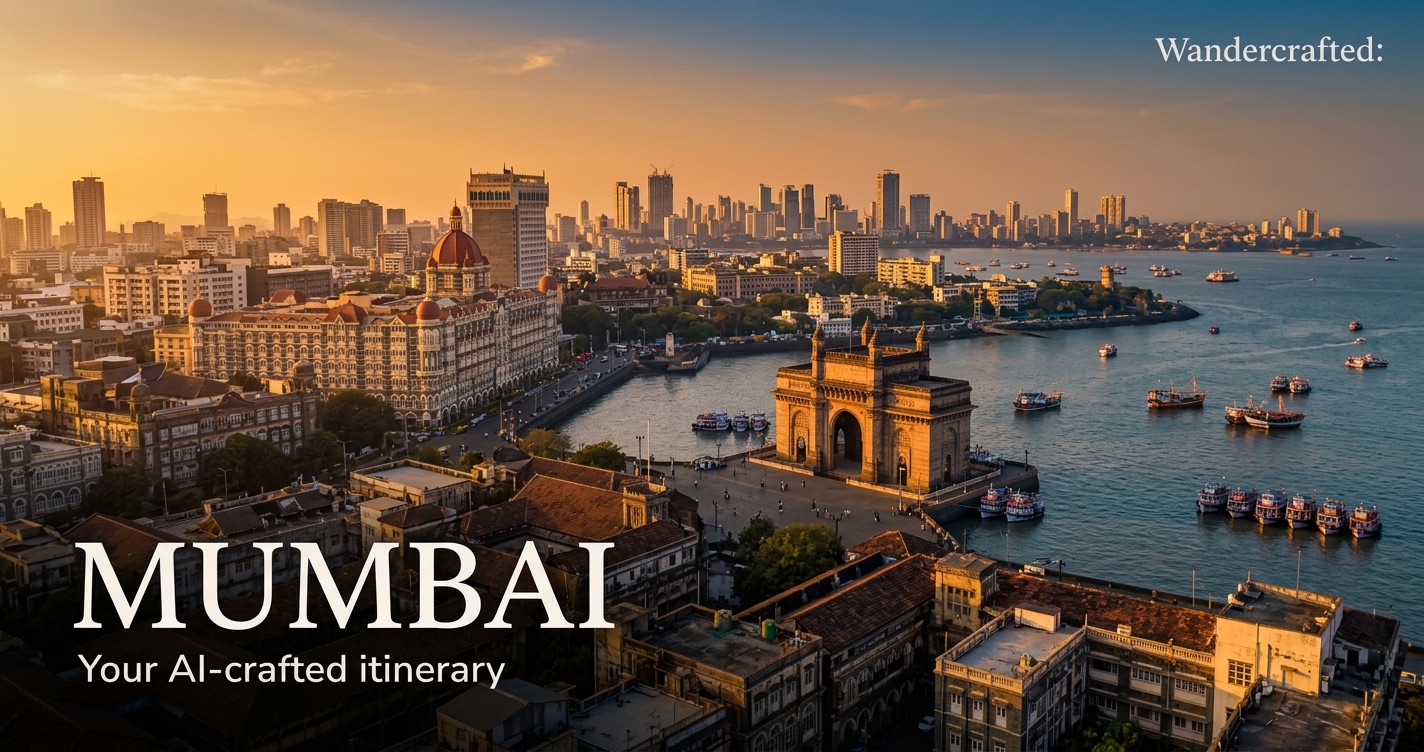
What a 5-day Mumbai trip actually looks like
Mumbai is a city of extreme contrasts — one of the world's most expensive real estate markets sits alongside Dharavi, one of Asia's largest informal settlements. Art Deco boulevards and Victorian Gothic railway stations serve 20 million people. The food ranges from Michelin-starred contemporary Indian to bhel puri on Chowpatty Beach.
Five days is enough to explore the historic core (Colaba, Fort, and the Gateway of India), Bandra's cosmopolitan cafe scene, Dharavi with a responsible tour, the Elephanta Caves by ferry, and the street food scenes that are Mumbai's most enduring attraction.
Gateway of India & Colaba
Fort & Kala Ghoda
Dharavi & Dhobi Ghat
Bandra, street food & island escapes
Essential Mumbai trip planning tips
Good planning makes Mumbai feel effortless. Here's what actually matters.
Use Uber or Ola
Mumbai's rickshaws only operate in the suburbs (north of Mahim). In central Mumbai, use Uber or Ola (the Indian equivalent). Black-and-yellow kaali-peeli taxis have meters — insist they use them.
Monsoon is dramatic
Mumbai's monsoon (June–September) is intense — several hours of heavy rain daily. Flooding is possible. November to February is dry, cool, and the best time. March–May is hot and humid before the rains.
What to eat
Vada pav (the Mumbai burger — potato fritter in bread with chutneys) is ubiquitous and excellent. Pav bhaji (spiced mashed vegetables with bread), dhokla, and bhel puri are all specific to Mumbai's food identity.
Local trains
Mumbai's suburban rail network is extraordinary — hundreds of thousands of people per train. For short distances within the city, safer to Uber. For long suburb-to-suburb trips, the train is fast and cheap but very crowded in peak hours.
Water and hygiene
Drink bottled water only. Avoid ice in street drinks. Wash hands frequently. Mumbai's street food is safe when chosen carefully — busy stalls with high turnover are always better.
Dress appropriately
Mumbai is India's most liberal city but modest dress (covered shoulders and knees) is appreciated at religious sites and in many neighbourhoods. Beach and Bandra areas are more relaxed.
This itinerary is just the starting point
Your Wandercrafted Mumbai plan adapts to exactly how you like to travel. Tell it your preferences:
Mumbai trip planning – frequently asked questions
Is Mumbai safe for tourists?
Generally yes. Mumbai has lower violent crime than many comparable megacities. The main risks are traffic (pedestrian crossings are suggestions, not rules), pickpockets in crowded areas, and the usual big-city awareness. Solo women travellers may experience unwanted attention — particularly outside the central tourist areas.
What is the best area to stay in Mumbai?
Colaba for historic sights and tourist convenience. Bandra West for a more local, cosmopolitan feel. Fort for the colonial architecture neighbourhood. Most first-time visitors prefer Colaba — it's central, walkable, and close to the Gateway of India.
How does Mumbai compare to Delhi?
Mumbai is coastal, more liberal, financially focused, and has the world's most diverse street food scene. Delhi has more historical monuments (Mughal architecture, Red Fort, Qutub Minar), a stronger arts scene, and the gateway to Rajasthan. Many visitors combine both — they're 2 hours apart by plane.
How does Wandercrafted personalise my Mumbai itinerary?
Tell us whether you want to prioritise street food culture, colonial and modern architecture, Bollywood and contemporary culture, or day trips. The AI builds a neighbourhood-by-neighbourhood plan with specific restaurant picks, transport notes, and the practical city knowledge that makes Mumbai feel navigable rather than overwhelming.
Explore all destinations
Wandercrafted builds personalised day-by-day itineraries for hundreds of cities worldwide.