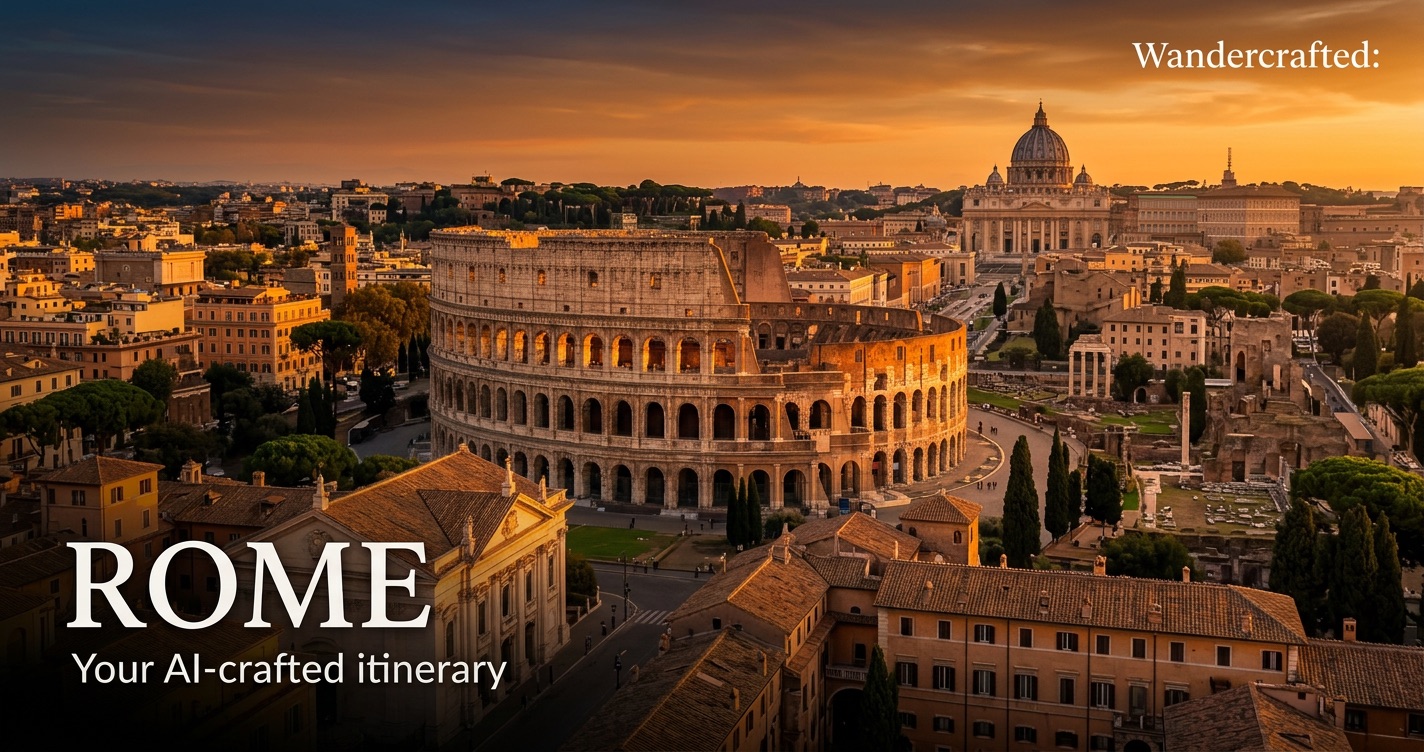
What a 5-day Rome trip actually looks like
Rome's problem is density. There's more ancient history, Renaissance art, and baroque architecture within a square kilometre than most countries contain entirely. The risk is spending five days in a queue at the Colosseum and leaving feeling you missed the city.
The sample below is a first-timer's balanced Rome — major sights bookended by slow neighbourhood afternoons. Your Wandercrafted itinerary will shift depending on whether you're here primarily for ancient history, art, food, or walking with no particular agenda.
Arrival & Trastevere
The Colosseum, Forum & Palatine Hill
Vatican City & Castel Sant'Angelo
Borghese Gallery, Navona & your pace
Essential Rome trip planning tips
Good planning makes Rome feel effortless. Here's what actually matters.
Book everything in advance
Colosseum, Vatican Museums, Borghese Gallery — all require pre-booked timed tickets. Walk-ups for the Colosseum can mean 2–3 hour queues. The Borghese is capped at 360 visitors per slot.
Coffee culture
Espresso at the bar is €1–1.50. Sitting down doubles or triples the price. Romans drink espresso standing at the counter in under 3 minutes — join them.
Rome is walkable
The historic centre is compact. The Colosseum to the Pantheon is 30 minutes on foot. Get a comfortable pair of shoes and leave the taxi app alone for your first two days.
Nasoni fountains
Rome's famous drinking water fountains (nasoni) provide clean, cold, free water throughout the city. Carry a refillable bottle and stop worrying about hydration.
Avoid July–August
Rome in midsummer is extremely hot (35–40°C) and extremely crowded. May–June and September–October are significantly better in every way, including price.
Pizza al taglio
Roman pizza is sold by the slice and by weight from bakeries (forno). €3–5 for a generous lunch. Roscioli and Antico Forno Roscioli near Campo de' Fiori are benchmarks.
This itinerary is just the starting point
Your Wandercrafted Rome plan adapts to exactly how you like to travel. Tell it your preferences:
Rome trip planning – frequently asked questions
How many days do you need in Rome?
Four to five days covers the major sights and lets you breathe. Three days is possible but rushed. A week lets you slow down properly — a day trip to Ostia Antica, a morning in a single neighbourhood café, real time in the Borghese gardens.
What's the best time of year to visit Rome?
April–June and September–October are ideal — warm, not scorching, manageable crowds. November and March are underrated: fewer tourists, lower prices, and Rome's architecture looks magnificent in moody light. July–August are the hottest and most crowded months and should be avoided if you have flexibility.
Is Rome expensive?
Moderate. Food is where Rome shines for value — a full pasta meal with wine in a neighbourhood trattoria runs €20–30 per head. Sights are priced reasonably (€16–22 for the Colosseum). Hotels in the historic centre are expensive (€150–250/night); the Prati and Testaccio neighbourhoods offer better value a short walk away.
How does Wandercrafted personalise my Rome itinerary?
Tell us whether you're here for ancient history, Renaissance art, food, or all three. Set your pace — Rome is as good at slow coffee mornings as it is at sprint-sightseeing. Wandercrafted builds a day-by-day plan that groups sights geographically, tells you when to pre-book, and includes specific restaurant recommendations for your budget and style.
Explore all destinations
Wandercrafted builds personalised day-by-day itineraries for hundreds of cities worldwide.