Paris has 20 arrondissements and dozens of distinct neighborhoods, each with its own character, price point, and pace. Choosing where to stay isn't just a logistics decision — it shapes the Paris you'll experience. The tourist who stays in the 7th will have a fundamentally different trip from the one who books a place in the 11th, even though they're only a few Métro stops apart.
This guide covers the seven neighborhoods most worth your consideration, with honest takes on who each one suits best. For a complete day-by-day Paris itinerary with restaurant picks and insider tips, see our 3-day Paris itinerary and best time to visit Paris guide.
The Marais (3rd & 4th) — The Undisputed Best All-Rounder
If you ask a well-traveled friend where to stay in Paris, they'll almost certainly say the Marais. It's the neighborhood that somehow manages to be simultaneously historic, fashionable, gay-friendly, Jewish, and aggressively cool without feeling like it's trying too hard. The 4th arrondissement contains the Île de la Cité (Notre-Dame, the Sainte-Chapelle) and Place des Vosges — the oldest planned square in Paris, ringed by redbrick arcades and filled with artists on sunny afternoons.
The 3rd (le Haut-Marais) is where things get more interesting. Rue de Bretagne with its covered market and excellent cafés, Rue Charlot lined with galleries and concept stores, and the backlanes between them packed with the best falafel in Europe on Rue des Rosiers. The Pompidou Centre anchors the western edge, and from there you're walking distance to the Hôtel de Ville, Île Saint-Louis, and the Seine.
Accommodation ranges from budget hostels to boutique hotels in 17th-century hôtels particuliers. The sweet spot for value is around Rue de Bretagne and the upper Marais, where you pay less than the tourist-facing 4th while losing nothing in terms of location. Be warned: it's one of the most popular areas to visit, so weekends bring crowds to the main pedestrian streets.
Saint-Germain-des-Prés (6th) — The Literary Left Bank
Saint-Germain is where Hemingway wrote, Sartre philosophized, and Picasso lived. The cafés Les Deux Magots and Café de Flore are now tourist landmarks, but they're still worth a coffee just to sit in those famous wicker chairs and watch the boulevard. The neighborhood retains genuine charm in its backstreets: Rue de Buci with its outdoor market, the quiet Place de Furstenberg where Delacroix's studio still stands, and the Luxembourg Gardens right at the southern edge.
The 6th is Paris at its most classically Parisian — Haussmann buildings, zinc-topped restaurants, and the kind of fromage shops where the owner will take 20 minutes to explain why you should try the comté aged 18 months instead of 12. It's also where some of the best independent bookshops cluster, including Shakespeare and Company on the Left Bank just across the river in the 5th.
Hotels here are expensive and fill quickly. The trick is to look slightly east into the 5th arrondissement (the Latin Quarter), which borders Saint-Germain and offers similar proximity to the Luxembourg Gardens and Notre-Dame at noticeably lower prices. The walk between them takes about eight minutes.
Montmartre (18th) — Village Above the City
Montmartre sits on a butte (hill) in the north of Paris, connected to the rest of the city by the funicular to Sacré-Cœur and a web of steep staircases. The view from the steps of the basilica at dawn — pink light washing over the Parisian rooftops stretching to the horizon — is one of the great free experiences in Europe. That alone is worth building your base here for.
The area around Place du Tertre immediately behind Sacré-Cœur is a tourist trap of the highest order — portrait artists and overpriced crêpes. But walk five minutes in any direction and the real Montmartre appears: Rue Lepic with its Sunday market and the legendary Café des Deux Moulins (from the film Amélie), the vineyard on Rue des Saules that still produces a few hundred bottles each autumn, and the quiet squares where locals drink rosé on summer evenings while kids kick footballs against the walls of century-old brasseries.
Prices for accommodation here are genuinely lower than the center, and the neighborhood is well-served by Métro lines 2 and 12. The catch is that getting to the southern sights (Eiffel Tower, Musée d'Orsay) requires connections. If your priority list is heavy on Left Bank museums, Montmartre is less convenient than it seems on the map.
Bastille & Oberkampf (11th) — Where Parisians Actually Go Out
The 11th arrondissement is the epicentre of Paris's contemporary food and nightlife scene. Rue Oberkampf and its tributaries contain more interesting bars per square metre than almost anywhere else in Europe — a mix of natural wine caves, craft beer rooms, low-lit cocktail bars, and the kind of French brasseries where the steak-frites is genuinely perfect at midnight. The neighborhood fills with locals (not tourists) from Thursday through Sunday, and the energy is completely different from the tourist-facing center.
The food scene is remarkable. The 11th has some of Paris's best neo-bistros — small restaurants run by young chefs doing creative French cooking at prices that would cost triple in the 6th or 8th. Septime, Bistrot Paul Bert, and dozens of equally excellent but less Instagram-famous places within easy walking distance. During the day, the Marché d'Aligre (just over the border in the 12th) is Paris's most chaotic and authentic outdoor market, worth setting an alarm for on Saturday morning.
Place de la Bastille anchors the western edge, providing easy Métro access to the Marais (one stop) and Notre-Dame (three stops). The 11th is also a short Vélib' ride from the Canal Saint-Martin in the 10th, which has its own distinct atmosphere of waterside cafés and Sunday afternoon flaneurs.
Canal Saint-Martin (10th) — Paris's Coolest Afternoon
The Canal Saint-Martin is a 4.5km canal that cuts through the 10th arrondissement, lined with iron footbridges, lock gates, and plane trees that turn gold in autumn. On Sunday afternoons, when the roads beside it are closed to cars, it becomes the most pleasant place in Paris to spend a few hours — locals spread out along the banks with baguettes, cheap wine, and books, creating an impromptu picnic culture that feels genuinely Parisian rather than performed.
The neighborhood around it is independent and unpretentious. Antoine et Lili, a concept store that has been on the canal since 1991, typifies the area's character. Artisan coffee roasters, vinyl record shops, natural wine bars, and the occasional excellent restaurant fill the streets between the canal and République. The 10th also contains Gare du Nord and Gare de l'Est, which is practical for Eurostar arrivals and day trips to Versailles, Champagne, or Brussels.
This isn't the neighborhood for first-time visitors who want to see everything in three days — the main Parisian sights require Métro rides from here. But for visitors who want to understand why creative professionals have been moving to Paris in the last decade, an afternoon by the canal followed by dinner in a side-street bistro is the clearest answer.
The 7th Arrondissement — The Eiffel Tower's Quiet Neighbor
The 7th is Paris's most overtly prestigious residential neighborhood. It's home to the Eiffel Tower, the Musée d'Orsay, the Rodin Museum, Les Invalides (Napoleon's tomb), and the Bon Marché department store. The wide, tree-lined avenues and Haussmann buildings are impeccably maintained, and there's a stillness here even on busy tourist days that the Marais and Montmartre can't match.
Rue Cler is the neighborhood's beating heart — a pedestrian market street where the same fromagerie, wine merchant, and butcher have been operating for decades, serving the local residents who actually live here (ambassadors, upper-management professionals, and old-money Parisian families). It's worth visiting even if you're not staying in the area, if only to understand what a neighborhood food market looks like when it serves people who care deeply about what they eat.
Hotels in the 7th are numerous and well-maintained but expensive. The Eiffel Tower view rooms command staggering premiums. If you want to be near the tower without paying for it, look at the edges of the 15th arrondissement, which borders the 7th to the south and offers similar proximity at lower rates.
Batignolles (17th) — The Local's Secret
Batignolles is the neighborhood Parisians recommend when visitors ask where locals actually live. It sits in the 17th arrondissement, north of the 8th and west of Montmartre, in a part of Paris that most tourists never reach. The Square des Batignolles is the local park — a proper English-style garden with a pond, ducks, and regulars who bring their dogs every morning. The Place de la Batignolles is a classic Parisian square with tabacs, boulangeries, and a Sunday organic market that draws the neighborhood out in force.
The restaurant scene is outstanding relative to price. Without tourist premiums, you eat genuinely well here for what you'd pay for mediocre food near the main sights. Cafés are the kind where the barman knows your name by day three. The neighborhood has been gaining quiet attention from the Parisian food press for the last few years, and the natural wine bars and neo-bistros opening on and around Rue des Batignolles are legitimately excellent.
The Métro connections aren't as central as the Marais or the 6th, but Line 13 takes you to Saint-Lazare (and onward to everywhere) in under ten minutes. For visitors who want to experience Paris as a place people actually live rather than a stage set for tourism, Batignolles consistently rewards the choice.
Practical Tips for Choosing Your Paris Neighborhood
Paris's Métro is exceptional — 16 lines, frequent trains, and cheap day passes mean that your neighborhood choice matters far less for logistics than it does for atmosphere and price. A 15-minute Métro ride connects almost any two points in the city. That said, a few practical considerations:
Hotel prices vary enormously by arrondissement. The 1st, 4th, 6th, and 7th are the most expensive; the 10th, 11th, and 18th offer the best value for money without sacrificing character. Airbnb availability is regulated — short-term rental rules are strictly enforced, so legitimate listings are concentrated in apartment buildings where long-term residents hold the licenses. Read reviews carefully; verified superhosts in the Marais and 11th typically deliver genuine value.
Safety is not a significant concern in any of the neighborhoods listed here. The areas around Gare du Nord require standard urban awareness at night, but none of the residential neighborhoods are dangerous. Pickpocketing is the real risk in tourist-heavy spots (Sacré-Cœur steps, the Eiffel Tower esplanade, the Métro line 1) — use a zipped bag and inside pockets.
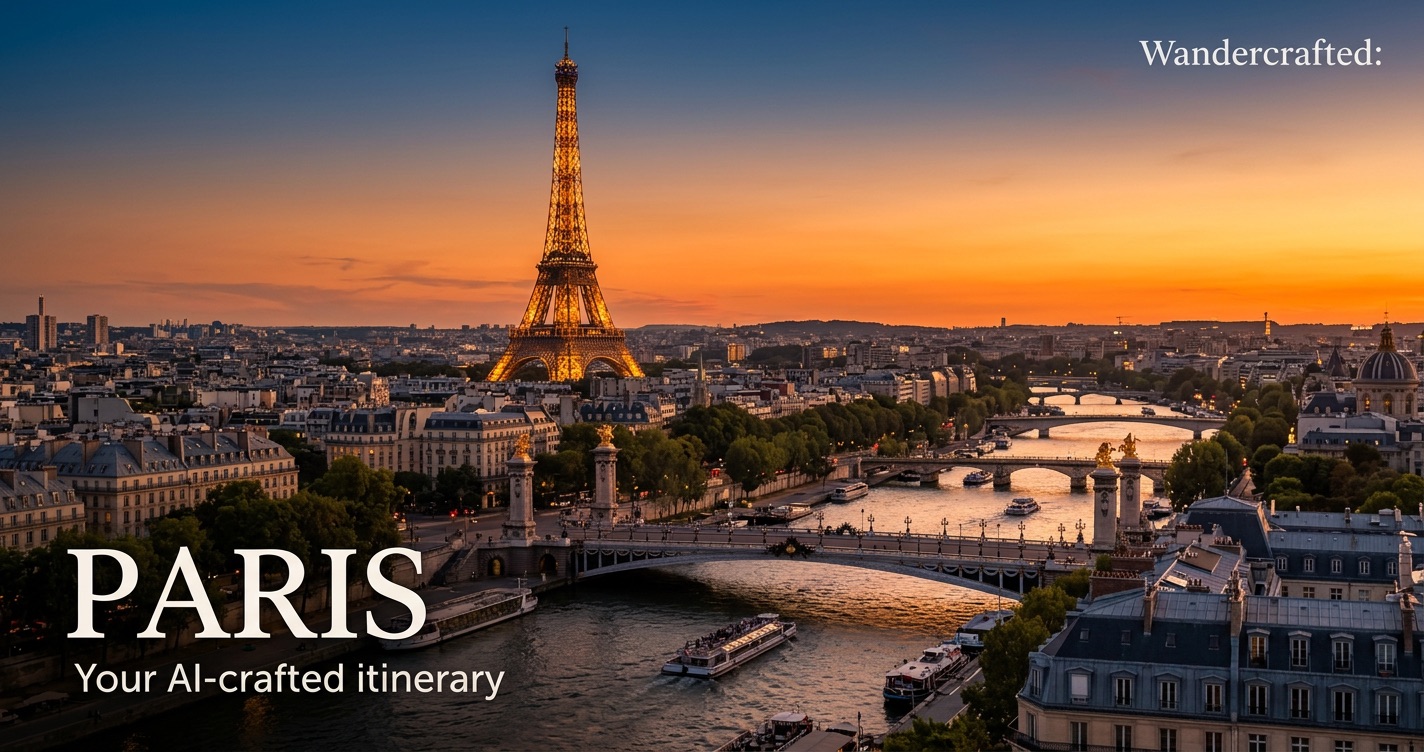
For the Eiffel Tower at night, you don't need to stay nearby. The tower sparkles on the hour every evening from dusk until midnight, and it's visible from many points across the city. Some of the best views are from Trocadéro (16th) and Champ de Mars (7th), both easily reached by Métro from wherever you're based.
Plan Your Paris Trip
Get a personalised day-by-day Paris itinerary with restaurant picks, museum reservations, and neighbourhood walks — powered by AI.
Start Planning FreeParis rewards the traveler who goes beyond the landmarks. Whichever neighborhood you choose as your base, the city's real pleasures — a perfect croissant at 8am, an accidental wine conversation with the owner of a cave à manger, stumbling onto a courtyard that shouldn't exist — happen at street level, at the pace of the neighborhood you're in. Choose with intention and Paris will exceed whatever you were expecting.