Tokyo is not one city. It’s dozens of cities stacked inside the same train network — each neighborhood with its own architecture, food culture, pace, and personality. Choosing where to stay matters more in Tokyo than almost anywhere else, because the city is enormous and commuting from the wrong base will cost you hours every day.
This guide covers the eight neighborhoods worth serious consideration, with honest assessments of who each area suits. For a full day-by-day itinerary with restaurant recommendations and insider tips, see our Tokyo 5-day itinerary and our guide to the best time to visit Tokyo.
Shinjuku — The Beating Heart of Modern Tokyo
Shinjuku Station handles over three million passengers a day, making it the busiest train station on earth. That fact tells you everything about why first-timers should stay here. Every major JR line, the Tokyo Metro, the Odakyu line, the Keio line, and the Seibu line all converge at Shinjuku. Getting anywhere in Tokyo from this base takes 15–30 minutes, maximum.
But Shinjuku isn’t just a transit hub. East Shinjuku contains Kabukicho, the city’s enormous entertainment district — host bars, karaoke parlors, pachinko halls, ramen alleys, and everything in between. Omoide Yokocho (Memory Lane) is a narrow alley of tiny yakitori stalls spilling smoke into the evening air, packed with salarymen after work and tourists who’ve discovered it on Instagram. Golden Gai, hidden behind it, is a labyrinth of bars so small some hold only five or six people, each with its own peculiar theme and clientele.
West Shinjuku is a different world: skyscrapers, business hotels, and the free observation deck at the Tokyo Metropolitan Government Building, which gives you arguably the best city panorama in Tokyo without paying admission. Shinjuku Gyoen National Garden — 144 acres of manicured lawns, Japanese-style gardens, and a greenhouse — sits just south, and it’s one of the best cherry blossom spots in the city in late March.
Shibuya & Harajuku — Fashion, Energy, and the Famous Crossing
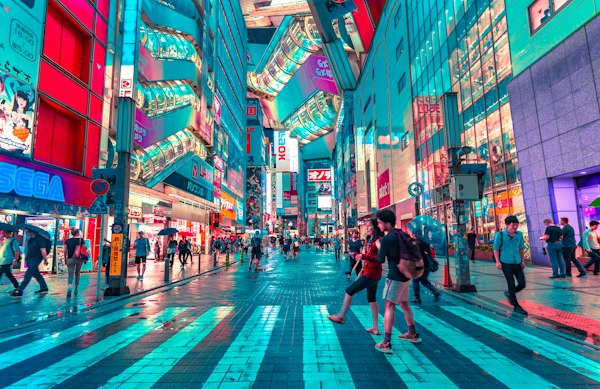
The Shibuya scramble crossing is one of those rare places that delivers on its reputation. When the lights change, up to 3,000 people cross simultaneously from all directions in a choreographed flow that somehow works. It’s genuinely impressive at any time of day, but particularly so on a rainy evening when everyone has an umbrella. The best views are from the Starbucks on the upper floor of the Mag’s Park building opposite, or from the newer Shibuya Sky observation deck.
Beyond the crossing, Shibuya’s strength is food and nightlife. Nonbei Yokocho (a cousin of Shinjuku’s Memory Lane) is quieter and more local-feeling. Shibuya Stream and Scramble Square are newer developments with excellent restaurant floors on their upper levels. The nightclub scene clusters around Dogenzaka, and Shibuya is the address for some of Tokyo’s best cocktail bars.
Harajuku, a short walk north, is a study in contrasts. Takeshita Street is loud, sugary, and relentlessly teenage — bubble tea shops, crepe stands, and fashion subculture merch. Two minutes away, Omotesandō is one of Tokyo’s most beautiful streets: wide, tree-lined, and flanked by flagship stores from every major European fashion house alongside Japanese architects’ most notable buildings (Toyo Ito’s Tod’s, Tadao Ando’s Omotesandō Hills, SANAA’s Dior). The contrast within 300 meters is quintessential Tokyo.
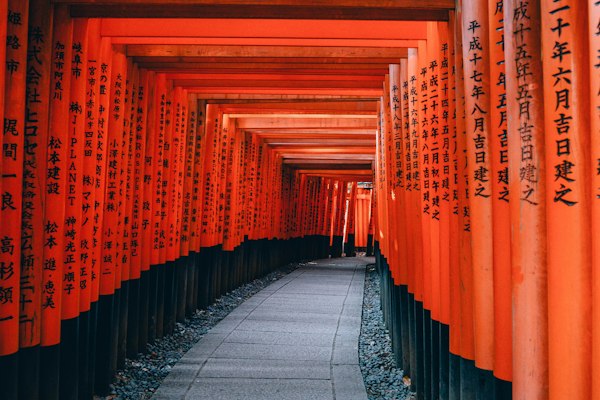
Meiji Shrine is a five-minute walk from Harajuku Station: a 175-acre forested sanctuary in the middle of the city, with gravel paths, towering torii gates, and the kind of silence that makes you forget you’re in a metropolis of 14 million people.
Asakusa — Old Tokyo Preserved
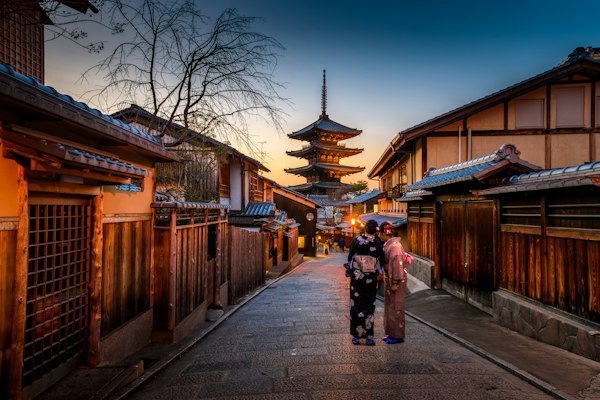
If Shinjuku is Tokyo’s future, Asakusa is its past. This is the neighborhood that survived — unlike most of central Tokyo, which was destroyed in the 1923 earthquake and again in the 1945 firebombing raids. Walking through Asakusa’s backstreets still feels something like what pre-war Tokyo might have been: wooden shopfronts, family-run sembei (rice cracker) shops, rickshaw operators waiting outside temples, and the smell of incense drifting from Nakamise-dori.
Senso-ji Temple is the anchor. Tokyo’s oldest temple, founded in 645 AD, draws 30 million visitors a year — which means it’s packed during the day and transcendently beautiful at 5am before the crowds arrive. The 5-story pagoda and the Kaminarimon gate (with its enormous red lantern) are the most-photographed spots in Tokyo. The surrounding streets have been a tourist destination since the Edo period; that commercial instinct is still there, but the craft shops selling traditional fans, tenugui cloth, and handmade combs are largely the real thing.
Asakusa is also the departure point for river cruises to Odaiba and Hamarikyu Gardens — a 40-minute boat ride that’s one of the better ways to see central Tokyo from the water. The neighborhood sits on the eastern edge of Tokyo, so transport to the west side of the city (Shinjuku, Shibuya) takes 30–40 minutes, but Ueno and Akihabara are close.
Shimokitazawa — Tokyo’s Bohemian Village
Shimokitazawa is what happens when a neighborhood resists the logic of Tokyo development for long enough to develop an identity. The area around Shimokitazawa Station is a maze of narrow streets — too tight for most cars — lined with vintage clothing stores, independent record shops, live music clubs, coffee roasters, and restaurants that look like they were furnished by rummaging through a storage unit. It shouldn’t work. Somehow it’s one of the most enjoyable places in the city.
The music scene is particularly strong. Shimokitazawa has more live venues per square kilometer than any neighborhood in Tokyo — small rooms where you stand close enough to the band to feel the bass. Many of Japan’s best indie acts play here before (and after) they get famous. On weekends, the streets fill with young Tokyoites in considered outfits browsing the same vintage rails they’ve been browsing for years.
Eating in Shimokitazawa rewards curiosity. There’s no landmark restaurant — just dozens of small places where the quality is high and the prices are far below comparable food in Shinjuku or Shibuya. Curry houses, izakayas serving unusual regional sake, excellent Ethiopian food, and bakeries doing things with sourdough that would cause queues in any European city.
The practical downside is transport: Shimokitazawa sits on the Keio Inokashira and Odakyu lines rather than the JR network, so getting across to the east side of the city (Asakusa, Akihabara) requires a change and takes 45–60 minutes. If your itinerary is heavily east-focused, base yourself elsewhere.
Akihabara — The Electric Town
Akihabara is a destination neighborhood rather than a base. The main street, Chuo Dori, is lined with multi-story electronics stores (Yodobashi Camera’s flagship here is the largest electronics retail space in the world), anime merchandise shops, maid cafes, and figure stores. If you have any interest in Japanese popular culture, gaming, or electronics, an afternoon in Akihabara is mandatory. The side streets are where the interesting stuff lives: dusty second-hand shops selling retro game cartridges, parts markets for amateur electronics builders, and specialist stores for every hobby imaginable.
As a place to stay, Akihabara is serviceable but not recommended unless you have a specific reason. The neighborhood shuts down early — most shops close by 9pm — and the restaurant scene is thin compared to Shinjuku or Shibuya. It’s well-connected via JR (on the Yamanote, Sobu, and Keihin-Tohoku lines), so visiting from a Shinjuku or Asakusa base is entirely practical.
Ginza — Tokyo’s Fifth Avenue
Ginza is where Tokyo gets serious about luxury. The Chuo Dori main avenue is lined with flagship stores from every major European fashion house — Chanel, Louis Vuitton, Cartier, Hermès — plus the Japanese counterparts: Issey Miyake, Comme des Garçons, Mikimoto. On weekends, the street is pedestrianized (a rare thing in Tokyo), and the whole boulevard takes on a more relaxed character.
Beyond shopping, Ginza has some of Tokyo’s best sushi restaurants (many requiring reservations weeks in advance), the Tsukiji Outer Market is a 15-minute walk for breakfast sushi and tamagoyaki on a stick, and the Kabuki-za Theatre puts on performances of Japan’s traditional theater form most months of the year.
Hotels in Ginza are among the most expensive in Tokyo. The area is exceptionally central — Ginza Station connects to five Metro lines — but the neighborhood quiets down considerably on weekday evenings once the shops close. It suits travelers who want a calm base with access to high-end dining and cultural institutions.
Nakameguro & Daikanyama — Design-Conscious and Canal-Side
Nakameguro has become one of Tokyo’s most photographed neighborhoods, largely because of the Meguro River canal: a two-kilometer stretch lined with coffee shops and restaurants, their decks hovering over the water. In spring it’s one of the best cherry blossom spots in the city — the trees arch over the canal in a pink tunnel that justifies every cliché you’ve seen of it. In autumn, the maples turn and the effect is equally striking.
Away from the canal, Nakameguro’s streets are full of independently run boutiques, architecture studios, and restaurants that attract Tokyo’s creative class. The Starbucks Reserve Roastery is here — one of a handful worldwide — and worth a visit even if you don’t usually drink chain coffee. Daikanyama, a five-minute walk, is even more design-oriented: the Tsutaya Books complex (a bookshop that functions as a cultural institution) is the anchor, surrounded by slow-food restaurants and boutiques that sell things you didn’t know you needed.
Neither neighborhood is cheap. Both are on the Tokyu Toyoko line, which connects directly to Shibuya (five minutes) and onward to Yokohama. As a base, they suit travelers who’ve been to Tokyo before and want something more residential.
Practical Advice for Choosing Your Base
Tokyo’s train network is one of the best in the world — comprehensive, frequent, and almost never late. In practical terms, this means no neighborhood is truly disconnected. From Shinjuku, you can reach Asakusa in 35 minutes, Akihabara in 20, and Shibuya in 5. The difference between neighborhoods is atmosphere, not access.
That said, a few considerations do matter. The JR Yamanote Line loops around the city’s main hubs (Shinjuku, Shibuya, Harajuku, Ebisu, Meguro, Gotanda, Osaki, Shinagawa, Tamachi, Hamamatsucho, Shinbashi, Yurakucho, Tokyo, Kanda, Akihabara, Okachimachi, Ueno, Uguisudani, Nippori, Tabata, Komagome, Sugamo, Otsuka, Ikebukuro, Mejiro, Takadanobaba, Shin-Okubo, and back to Shinjuku). Any neighborhood on this loop is better connected than one off it.
Accommodation pricing follows a clear gradient. Shinjuku and Shibuya have the most hotels and therefore the most competitive prices. Asakusa is strong for budget guesthouses. Ginza and Marunouchi are the most expensive. Shimokitazawa and Daikanyama have fewer options at any price point.
If you’re visiting Tokyo for the first time, the advice is simple: stay in Shinjuku, explore everything else as a day trip. If you’re returning, pick a neighborhood that suits your interests — Shimokitazawa for music and vintage, Nakameguro for design and canal-side coffee, Asakusa for temples and traditional craft.
Plan Your Tokyo Itinerary
Get a free personalized day-by-day Tokyo plan — built around your neighborhood choice, interests, and how long you have.
Start Planning Free →Tokyo Neighborhood Quick Reference
Shinjuku — Best for: first-timers, transport access, nightlife, all budgets. Avoid if: you want quiet evenings or a local residential feel.
Shibuya / Harajuku — Best for: fashion, design, scramble crossing, younger travelers. Avoid if: budget is very tight or you want traditional atmosphere.
Asakusa — Best for: traditional culture, budget accommodation, Ueno and east-side attractions. Avoid if: your itinerary is west-heavy (Shinjuku, Shibuya, Nakameguro).
Shimokitazawa — Best for: music, vintage, bohemian atmosphere, repeat visitors. Avoid if: east-side access is important or you want lots of hotel options.
Akihabara — Best for: electronics and anime culture (as a day trip). Not recommended as a primary base.
Ginza — Best for: luxury shopping, high-end dining, Tsukiji proximity, calm evenings. Avoid if: budget is a concern.
Nakameguro / Daikanyama — Best for: design lovers, cherry blossom season, creative-class atmosphere. Avoid if: it’s your first trip and you need broad access.