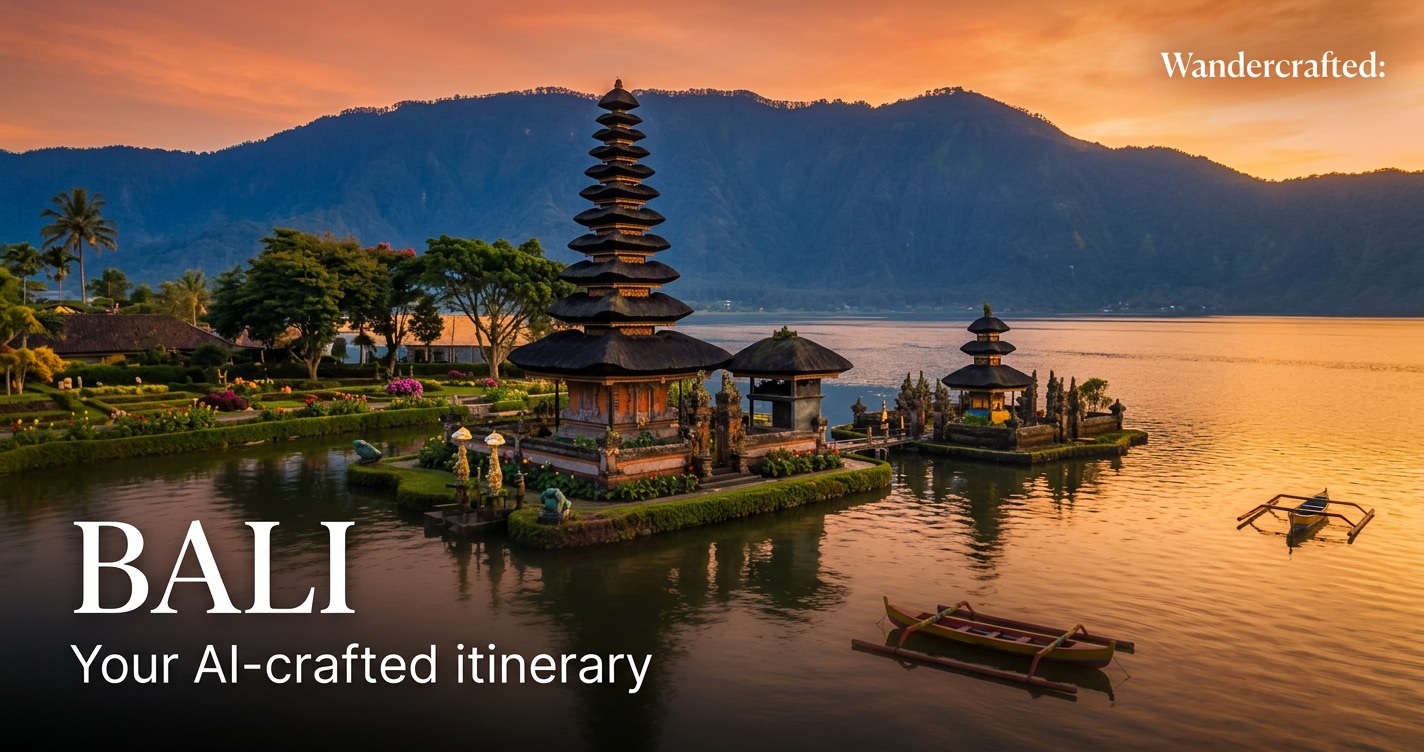
The short answer
Seven days is ideal for Bali, giving you enough time to experience the island's three distinct zones without feeling rushed. You'll explore Ubud's cultural heart (temples, rice paddies, arts scene), Seminyak and Canggu's beach towns (nightlife, restaurants, surfing), and Uluwatu's clifftop temples and dramatic coastline. Unlike crowded cities, Bali rewards slowness — sit in a rice terrace at dawn, watch a temple ceremony, take a yoga class overlooking jungle, have long meals at family-run warungs. This itinerary balances activity with breathing room, culture with beach time, and spirituality with relaxation. Add more days to go island-hopping or deepen your meditation practice; subtract days only if time is tight.
Why 7 days works for Bali
Bali operates on different rhythms than crowded cities. Temples require stillness, rice paddies demand dawn walks, beach days invite lingering dinners. Five days feels rushed if you actually want to experience Bali; 7-10 days hits the sweet spot. Unlike Tokyo or Paris (where you can power through highlights), Bali punishes hurrying. Three days allows only Ubud or only beaches; seven gives you both, plus time to wander, meditate, and recover from island chaos. Balinese culture isn't background — it's alive in ceremonies, offerings in doorways, smiling faces everywhere. This requires time to digest. The itinerary below covers three regions, top activities, and insider knowledge. Adjust freely based on your interests: yoga lovers might extend Ubud and skip nightlife; beach bums might reverse the order.
Quick 7-day overview
| Days | Zone | Focus | Budget/Day |
|---|---|---|---|
| Days 1-3 | Ubud | Temples, rice terraces, arts, culture | 60-120 USD |
| Days 4-5 | Seminyak/Canggu | Beaches, nightlife, restaurants, surfing | 80-150 USD |
| Days 6-7 | Uluwatu | Clifftop temples, views, final beach time | 70-130 USD |
Why this order? Arriving in Ubud first (cooler, spiritual, jet-lag friendly) lets you acclimatise before beach clubs and nightlife. Ending in Uluwatu allows you to catch sunset views and be close to the airport (easier departure). You can reverse this if flying into Denpasar near Seminyak. The 7 days also split neatly into cultural immersion, beach relaxation, and scenic exploration.
Days 1-3: Ubud — Rice paddies, temples, and culture
Bali's cultural heart: temples, terraces, and spiritual awakening
Day 1: Arrival and Ubud orientation
Arrive at Ngurah Rai International Airport (Denpasar). Book a private driver or pre-arrange a hotel pickup (100,000-150,000 IDR / 7-10 USD for 1.5-hour drive to Ubud; avoid taxis — negotiate pre-ride or use Grab app, which works here). Ubud sits in central highlands, cooler and greener than southern beach areas. Check into your hotel, rest, and wander the main streets: Ubud Market (local produce, souvenirs, touristy but authentic), Monkey Forest entrance (famous temple with 700+ monkeys — visit tomorrow for time and presence), restaurants along Jalan Raya.
Lunch: Warung Bodag Maliah (traditional Balinese food, overlooking rice paddies, 60,000-80,000 IDR / 4-5 USD). Dinner: Karsa Kafe (upscale Balinese cuisine, teak pavilions, 150,000-250,000 IDR / 10-17 USD) or budget option Sayan House (casual, 80,000-120,000 IDR). Ubud has excellent vegan/vegetarian spots (Yellow Flower Cafe, Atman Kafe) if you're plant-based.
Evening: Explore Ubud town on foot. Visit a traditional dance show (Kecak, Legong, or Barong) at various venues (60,000-150,000 IDR / 4-10 USD). Retire early — jet lag and the drive are taxing.
Day 2: Temples and rice paddies
Early morning (6-7 AM): Visit Tegallalang Rice Paddies, Ubud's iconic emerald terraces. Go early before tour groups arrive. The view is staggering — thousands of metres of stepped rice paddies, farmers walking paths, the smell of earth and water. Rent a scooter (100,000 IDR / 7 USD/day) or hire a driver (200,000-300,000 IDR / 13-20 USD for the day). Walk down into the paddies — several cafes (Tegallalang Terrace, Cafe Wayan) sit within the terraces, serving breakfast (nasi kuning, coffee) for 40,000-60,000 IDR. Spend 2-3 hours here. The rice paddies are more moving at dawn; avoid midday crowds.
Mid-morning: Visit Tegallalang Waterfall (nearby, 10 mins), a double waterfall with misty jungle atmosphere. Entry 15,000 IDR / 1 USD.
Afternoon: Return to Ubud. Visit Sacred Monkey Forest Sanctuary (Ubud's temple complex home to 700+ grey macaques). Entry 80,000 IDR / 5 USD. The temple is beautiful — carved gateways, moss-covered stones, howling monkeys — but monkeys are chaotic. Don't bring anything tempting; they steal bags, glasses, phones. Pro tip: monkeys fear firm eye contact and loud voices, but also show affection. Spend 1-2 hours here. Watch a Kecak dance in the forest (arranged at entrance, 60,000 IDR / 4 USD).
Lunch/dinner: Karsa Kafe again or Locavore (Ubud's Michelin-star option, 300,000-500,000+ IDR / 20-33+ USD for 10+ courses; book ahead) if splurging. For mid-range, Alchemy (organic farm-to-table, 100,000-150,000 IDR / 7-10 USD) or Jatiguwung Homestay Restaurant (family-run, incredible homemade food, 50,000-80,000 IDR / 3-5 USD).
Day 3: Arts, yoga, and deeper temples
Morning yoga: Ubud has dozens of yoga studios. Yoga Barn offers classes in a jungle setting (150,000 IDR / 10 USD per class). Alternatively, Radiantly Alive or Soka Indah (both excellent). Even non-yogis should try one class — the experience of practicing in Bali's spiritual energy is transformative.
Mid-morning: Visit Goa Gajah (Elephant Cave), a 11th-century Hindu temple carved into a hillside. Entry 30,000 IDR / 2 USD. The intricate carvings are remarkable, and the small temple complex is serene. Nearby, Tirta Empul Temple (30 mins drive) is a water temple with sacred spring pools where locals bathe for purification. Entry 30,000 IDR / 2 USD. The pools are cool, spiritual, and slightly touristy — but genuine.
Afternoon: Explore Ubud Arts Market, artist studios, and galleries. Ubud Market (morning best for local energy) or Arca Market (crafts, woodcarvings, homestay souvenirs). Many studios offer pottery, painting, or woodcarving classes (200,000-400,000 IDR / 13-27 USD for 2-3 hours) — try a quick workshop.
Dinner: Sayan House or Bridges Bali (overlooks Campuhan Ridge and Ubud valley, incredible sunset views, 150,000-300,000 IDR / 10-20 USD). Eat early (6 PM) to catch the last light.
3-day Ubud budget: Accommodation 400,000-800,000 IDR (27-53 USD/night for mid-range), meals 150,000-300,000 IDR/day (10-20 USD), activities 300,000 IDR (20 USD), transport 200,000 IDR (13 USD) = ~1,500,000 IDR total (100 USD for 3 days) or ~200-240 USD for mid-range comfort.
Insider tips: Ubud feels walkable but distances deceive — hire a driver or scooter. Monkeys are adorable but dangerous — keep bags zipped. Water refill bottles everywhere (refill at hotels or cafes). Many temples require sashes (sarongs available at entrance, 20,000-50,000 IDR / 1-3 USD rental). Balinese ceremonies happen daily but aren't performances — if you encounter one, dress respectfully and observe quietly. Tipping isn't required (unlike Western countries) but appreciated (10-15% at restaurants is fine).
Days 4-5: Seminyak and Canggu — Beaches and nightlife
Beach town vibes: sand, surf, sunset cocktails, and excellent food
Day 4: Travel to Seminyak and beach time
Hire a driver from Ubud to Seminyak (1.5 hours, 300,000-400,000 IDR / 20-27 USD). Seminyak is Bali's southern beach hub — touristy but lively, with excellent restaurants, beach clubs, and surfing. Check into your hotel. Seminyak Beach is busy and touristy; skip it and head to Canggu Beach (5 mins north) instead — wider sand, better surfing, younger vibe, fewer touts. Afternoon beach time: swim, surfing lessons (300,000-500,000 IDR / 20-33 USD for 1-2 hours), or just lie in sand.
Lunch: Beach warung (simple wooden shacks selling grilled fish, satay, rice) for 40,000-80,000 IDR / 3-5 USD. Single Fin (Canggu, beachfront bar with food, sunset views, 150,000-250,000 IDR / 10-17 USD). Dinner: Naughty Nuri's (famous for ribs, Seminyak location, 200,000-350,000 IDR / 13-23 USD, book ahead) or La Lucciola (Italian beachfront, Seminyak, 200,000-400,000 IDR / 13-27 USD). Mid-range: Betelnut Cafe (casual Asian fusion, 100,000-180,000 IDR / 7-12 USD).
Evening: Explore Seminyak's restaurant row (Jalan Laksmana has dozens of spots) and beach clubs. Potato Head Beach Club (sunset drinks, 100,000-200,000 IDR / 7-13 USD) or Swim Club (pool, food, DJ, 150,000-250,000 IDR / 10-17 USD). Beach clubs are pricey but experience Bali's social scene. Alternatively, find a local bar and chat with travellers — Seminyak's energy is all about meeting people.
Day 5: Canggu exploration and water sports
Early morning: Sunrise at Canggu Beach (6-6:30 AM) — the light is magical. Local surfers catch waves; the vibe is peaceful before the day starts. Coffee from a beach warung.
Morning: Surfing lesson or continue if you're experienced. Canggu has several breaks (Padang Padang is famous but sharp rocks; Canggu's main beach is easier for beginners). Rip Curl School of Surf or Odyssey Surf School (both excellent, 300,000-500,000 IDR / 20-33 USD for 2 hours). Or skip surfing — explore Canggu's temple scene: Pura Batu Bolong (clifftop temple with hole-in-the-wall rock formation, entry free but small offering appreciated). Swim in the pool here; it's peaceful.
Afternoon: Beach clubs, shopping streets (Jalan Bumbak in Canggu for vintage shops, cafes, independent boutiques), or spa time. Balinese massage is cheap (100,000-200,000 IDR / 7-13 USD/hour at good places) — get a traditional massage or modern spa treatment. Karmakamet (high-end spa, organic, 300,000-500,000 IDR / 20-33 USD) or Taksu Spa (mid-range, excellent, 150,000-250,000 IDR / 10-17 USD).
Lunch: Karsa Kafe branch (yes, Ubud's famous spot has a Canggu location) or Warung Bodag Maliah (also expanded to beach towns). Dinner: Locavore has a Seminyak location (advanced reservations required), or try Mozaic Beach Club (high-end beachfront, 400,000-700,000+ IDR / 27-47+ USD) or budget-friendly Warung Petanu (traditional Balinese, 60,000-100,000 IDR / 4-7 USD).
Evening nightlife: Seminyak and Canggu have beach clubs and nightlife (Double Six, Palazzo, La Baracca, etc.). Party until 2-3 AM if you wish, or head to quieter bars. Bali's social scene is relaxed — dress casually, haggle friendly-like, and meet locals and travellers.
2-day beach budget: Accommodation 300,000-600,000 IDR (20-40 USD/night for mid-range), meals 250,000-400,000 IDR/day (17-27 USD), activities/surfing 300,000 IDR (20 USD), spa 150,000 IDR (10 USD) = ~1,600,000 IDR total (107 USD for 2 days) or ~150-200 USD for comfortable mid-range.
Insider tips: Seminyak can feel touristy and pricey — Canggu is hipper, younger, slightly cheaper, and more authentic. Both have excellent food; don't miss local warungs. Sunset over Seminyak Beach is stunning (6-7 PM). Swim safety: ocean current can be strong — swim in lifeguard areas, ask locals before entering. No need for nightlife if you're tired — Bali's beaches are excellent for quiet days too.
Days 6-7: Uluwatu — Temples and clifftop views
Clifftop temples, dramatic coastline, and final island magic
Day 6: Uluwatu arrival and temple exploration
Drive from Seminyak to Uluwatu (45 mins, 300,000-400,000 IDR / 20-27 USD). Uluwatu is Bali's southernmost peninsula — dramatic cliffs, golden coastline, world-class temple architecture, and iconic views. Check into your accommodation. Pura Luhur Uluwatu is Bali's most stunning temple: perched on a 70-metre cliff, overlooking the Indian Ocean, with intricate stone carvings and monkey residents. Entry 50,000 IDR / 3 USD. Visit late afternoon (4-6 PM) for sunset light — photographers' paradise. The temple itself is small (30 min) but the views are jaw-dropping. Attend a traditional Kecak Fire Dance performance at the temple (7-8 PM, 150,000-250,000 IDR / 10-17 USD) — the dancers perform on the cliff edge with the ocean as backdrop. It's touristy but spectacular.
Lunch: Sepia Ula (cliffside cafe, 80,000-150,000 IDR / 5-10 USD) or Warung Sopa (beachfront warung below the cliffs, 50,000-100,000 IDR / 3-7 USD). Dinner: Nista Kebab (Turkish, Uluwatu village, 100,000-150,000 IDR / 7-10 USD) or Sunroof Rooftop Bar (sunset drinks, 150,000-250,000 IDR / 10-17 USD).
Day 7: Final beach time and departure prep
Morning: Explore Padang Padang Beach, a hidden cove accessed via narrow stairs (free entry). The beach is smaller, hidden beneath cliffs, with excellent surfers and a bohemian vibe. No vendors or crowds — just sand, crystal water, and peace. Swim, watch surfers, relax. Warung Padang Padang (beachside, 60,000-100,000 IDR / 4-7 USD) serves excellent food. This is likely your final Bali memory — take it in.
Afternoon: Pack, visit Uluwatu town market (Melasti Market) for last-minute souvenirs (spices, sarongs, woodcarvings), or get a final massage. If your flight is evening, relax in a beach club or cafe. Oneworld Cafe (excellent coffee, smoothies, 50,000-100,000 IDR / 3-7 USD) is perfect for last-minute lounging.
Departure: Ngurah Rai Airport is 45-60 mins from Uluwatu. Book a driver or Grab (300,000-400,000 IDR / 20-27 USD) to the airport. Allow 2-3 hours before international flight time. Get coffee and banana cake from Bali's airports — a final taste of island life.
2-day Uluwatu budget: Accommodation 250,000-500,000 IDR (17-33 USD/night), meals 200,000-300,000 IDR/day (13-20 USD), activities 200,000 IDR (13 USD), transport 300,000 IDR (20 USD) = ~1,450,000 IDR total (97 USD for 2 days) or ~150-180 USD for comfortable stay.
Insider tips: Uluwatu's cliffs are stunning but exposed — bring sunscreen and water. Temple dress code (sarongs) available at entrance. Monkeys here are fewer but still present — secure bags. Sunset views at Uluwatu Temple are best (5-6 PM) before the Kecak dance. Padang Padang Beach is best early morning before surfers arrive. If you miss any activity, don't stress — Bali's magic is in slowness and serendipity, not checklists.
7-day Bali budget breakdown
| Category | Budget Traveler | Mid-Range | Luxury |
|---|---|---|---|
| Accommodation (7 nights) | 200,000-400,000 IDR/night = 1,400,000-2,800,000 IDR (93-187 USD) | 500,000-800,000 IDR/night = 3,500,000-5,600,000 IDR (233-373 USD) | 1,500,000-3,000,000+ IDR/night = 10,500,000-21,000,000+ IDR (700-1,400+ USD) |
| Meals (3/day) | 80,000-150,000 IDR/day = 560,000-1,050,000 IDR (37-70 USD total) | 250,000-400,000 IDR/day = 1,750,000-2,800,000 IDR (117-187 USD total) | 800,000+ IDR/day = 5,600,000+ IDR (373+ USD total) |
| Activities & transport | 400,000-600,000 IDR (27-40 USD; temples free-cheap, driver shared) | 800,000-1,200,000 IDR (53-80 USD; private driver, surfing, spa) | 2,000,000+ IDR (133+ USD; private guides, premium experiences) |
| Total 7 days | 3,000,000-4,500,000 IDR (200-300 USD) | 6,500,000-9,600,000 IDR (433-640 USD) | 18,000,000+ IDR (1,200+ USD) |
Budget travellers can stay in guesthouses (200,000-300,000 IDR / 13-20 USD/night), eat at warungs (40,000-80,000 IDR / 3-5 USD/meal), use shared transport, and still experience Bali fully. Mid-range offers comfort, good hotels, proper restaurants, and private drivers. Luxury involves villas, fine dining, and premium tourism. Bali is one of the world's best-value destinations — even mid-range is incredibly affordable. Most first-timers spend 100-150 USD/day comfortably.
Pro tips for your 7-day Bali itinerary
- Private driver: Worth booking for the full 7 days (600,000-800,000 IDR / 40-53 USD/day). They navigate traffic, know side roads, and become impromptu guides. Negotiate daily rates for better value than Grab rides per trip.
- Temple etiquette: Wear sarongs at temples (available at entrance, 20,000-50,000 IDR rental). Remove shoes. No loud voices, no photography during ceremonies. If a ceremony is occurring, observe quietly — you're witnessing genuine spirituality, not tourism.
- Monkeys: Cute but thieving. Never leave bags unattended. Don't feed them or make direct eye contact (seen as aggression). If a monkey approaches, stand still or walk away slowly. Lost glasses/phones are gone.
- Grab app: Works in southern Bali (Seminyak, Canggu, Uluwatu) but unreliable in Ubud. Download and use where available.
- Rupiah: ATMs everywhere (withdraw large sums to avoid fees). 15% tipping is fine (not required but appreciated at restaurants). Bargain at markets, not at fixed-price shops. Credit cards accepted in touristy areas; cash needed for warungs.
- Water and health: Drink bottled or filtered water (stomach issues are common). Sunscreen is essential (sun is intense). Dengue mosquitoes active dawn/dusk — bring repellent. Most stomach issues resolve with probiotics or rest.
- Timing: Temples open dawn-dusk (no time limits). Arrive early to beat crowds. Sunrise and sunset are golden-light hours — plan activities around them.
- Respect for culture: Bali is Hindu (unlike Muslim-majority Indonesia). Respect offerings in doorways, temple grounds, and rice paddies. Don't step on them. Many Balinese are incredibly patient with tourists — reciprocate kindness.
- Food safety: Eat where locals eat (safest). Popular warungs have high turnover, so food is fresh. Avoid raw vegetables at cheap spots. Cooked food is generally safe. Street food is delicious if busy (high turnover = fresh).
- Plastic: Bring a reusable water bottle. Bali has serious plastic pollution — using your own bottle helps.
Ready to plan your Bali adventure?
Use Wandercrafted's AI itinerary builder to generate a customised Bali plan tailored to your interests, pace, and budget. Swap activities, add favourite restaurants, or discover hidden temples — all in real time.
Create my Bali itinerary →Frequently asked questions
Is 7 days enough for Bali?
Absolutely. Seven days is ideal for first-time visitors, giving enough time to experience Ubud's culture and temples, beach towns' relaxation and food, and Uluwatu's dramatic coastline — all without feeling rushed or burned out. Five days feels tight; 10+ days allows island-hopping (Lombok, Gili Islands) or deeper meditation. Seven days hits the perfect balance for most travellers.
What's the best budget for 7 days in Bali?
Budget estimates: Budget traveller (guesthouses, warungs, local transport): 200-350 USD total. Mid-range (modest hotels, restaurant meals, private driver): 450-700 USD total. Luxury (villas, fine dining, private guides): 1,000-2,500+ USD total. A comfortable mid-range experience typically costs 100-150 USD per day. Bali is exceptionally affordable — accommodation costs 30-50 USD/night, meals 8-15 USD, activities 10-30 USD. Even mid-range feels luxurious compared to Western destinations.
Should I rent a scooter in Bali?
For experienced riders comfortable with chaos: yes. Scooters cost 100,000-150,000 IDR / 7-10 USD/day and give freedom. Roads are chaotic, left-hand driving takes adjustment, and traffic rules aren't followed strictly. For first-timers or nervous riders: hire a driver instead (50-80 USD/day, negotiable for multi-day). Drivers navigate traffic, know shortcuts, and provide local context. Grab (ride-sharing) works in southern Bali but is expensive. A balanced approach: hire driver for longer distances (Ubud to Seminyak), rent scooter for local exploration.
What's the best time to visit Bali?
Dry season (April-October) is ideal: sunny weather, vibrant temples, lush rice paddies, fewer crowds (except July-August). May-June and September-October are perfect — balanced weather and fewer tourists than peak season. Wet season (November-March) brings afternoon rains, lower prices, fewer tourists, and dramatic cloud-covered landscapes. Best months overall: May-June or September-October. Avoid mid-July to August if crowds frustrate you. Monsoon months (December-February) can be magical if you enjoy rain and solitude — but infrastructure is wet.
What to experience based on your travel style
Bali serves every travel type. Here's how to tailor the 7 days to what moves you:
Final thoughts
Bali intoxicates because it gifts simultaneously. You can meditate in a jungle temple at dawn, surf emerald waves at noon, and watch a clifftop dance at sunset — all in one day. The island demands slowness but rewards curiosity. Ancient spirituality pulses alongside beach-club hedonism. A 15 USD meal is transcendent; a 150 USD meal is decadent. This itinerary is a framework, not a prescription. Skip Ubud if beaches call to you. Extend Seminyak if the vibe takes hold. Spend an extra night in a mountain village or beach bungalow. Attend a ceremony you stumble upon. Talk to locals at warungs. The best Bali experiences happen unplanned — when you're alert enough to notice. Safe travels, and may Bali's magic find you.